

The assassination of Hezbollah secretary general Hassan Nasrallah in Beirut will not diminish the group he once led. The killing demonstrates the counterintuitive notion that eliminating the head of an organisation does not always destroy it. Hezbollah has a bureaucratic set-up, with a robust ideology and communal support. Any armed organisation that benefits from all three tends to survive the death of its leader.
The October 7 attacks led by Hamas proved to be a conundrum for Hezbollah. Before that, the group had been challenged by Lebanese protesters, including by members of the Shiite community, since 2019, for controlling a corrupt Parliament and allowing Iran to violate Lebanon’s sovereignty.
The war in Gaza allowed Hezbollah to deflect attention from its domestic woes, by launching rockets against Israel, in solidarity with Hamas, but not doing enough to risk immediate Israeli retaliation. It forced Israel to keep some military forces in the north and the evacuation of civilians from there.
Nasrallah’s death will most likely lead to a significant proportion of the Lebanese public rallying behind Hezbollah. The protests in 2019 were a domestic matter. With the assassination having been carried out by a foreign state, Israeli Prime Minister Benjamin Netanyahu may end up uniting the Lebanese people in a way that has been elusive since the end of the nation’s civil war in 1990.
In 1992, the year after the civil war ended, Israeli helicopters killed Hezbollah’s then secretary general, Abbas Al Musawi, as well as his wife and six-year-old son in a motorcade. In Ronen Bergman’s book, Rise and Kill First: The Secret History of Israel’s Targeted Assassinations, he documents how some Israeli military figures had opposed the killing as “Hezbollah was not a one-man show, and [Al] Musawi was not the most extreme man in its leadership”. Indeed, they warned, he “would be replaced, perhaps by someone more radical”.
Al Musawi was succeeded by Nasrallah, who proved to be more charismatic and eloquent. At the time, Hezbollah was a small militia, employing suicide bombs as its most powerful weapon. When Nasrallah emerged, he put a military commander, Fouad Shukr, who was killed in July in a similar strike, in charge of stepping up sophisticated guerrilla attacks on Israeli forces in the south of Lebanon. These attacks, as well as rocket launches, compelled them to withdraw in 2000, marking a rare and significant Israeli loss to an Arab military force.
In this respect, history is a study of unintended consequences, as Israel’s assassination scored a vendetta, only to witness a replacement who proved to be a more adept leader – a possibility that exists with Nasrallah’s successor.
The group has a top-down, military-style bureaucracy, while at the same time maintaining a diffuse and decentralised military command structure to operate if higher-level commanders are killed during battle. Its bureaucracy, with clear chains of command, will enable it to select a new leader. It has routinised its leadership succession, whereby the secretary general is appointed by a council, so that the legitimacy of the successor derives from the position and not the individual.
Hezbollah adheres to the “Axis of Resistance” ideology, along with Iran, the Houthis of Yemen and Hamas in Palestine, based on resistance to Israel and the US. However, the group also blends Lebanese nationalism, as well as a southern Lebanese identity, invoking how the region has suffered from Israeli actions since its first invasion in 1978. The ideology does not depend on a leader for its articulation or propagation. As a set of ideas, it existed before Nasrallah became the leader in 1992.
Hezbollah earned credit for driving Israeli troops out of Lebanon in 2000. One of the factors behind this success was the willingness of the group’s members and followers to sacrifice their lives for their cause. Their propaganda focuses on seeking inspiration from the success of Iran’s revolution in 1979.
This dynamic contributes to the third factor Hezbollah enjoyed: popular support within certain communities. The group’s presence in the south of Lebanon is enabled by a network of sympathetic Arab villages, that goes beyond just its Shiite Muslim base, including some members of the Christian community.
-
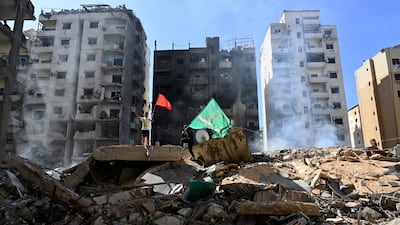
Damage in Beirut after an overnight Israeli strike. EPA -
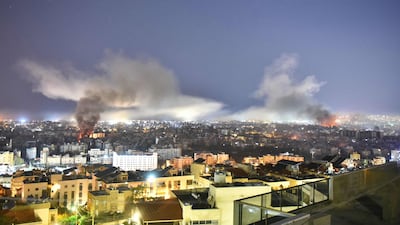
Smoke rises from the site of an Israeli strike in the south of Lebanon's capital. AFP -
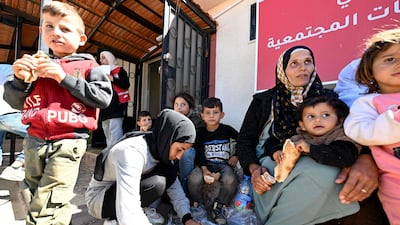
Displaced Syrians and Lebanese enter Syria from Lebanon at the Jusiyah border crossing. AFP -

The site of the Israeli air strike that killed Hezbollah leader Hassan Nasrallah, in Beirut. AP -
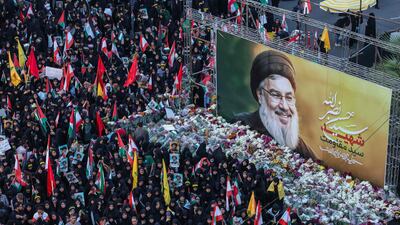
Iranians lay flowers before a portrait of Nasrallah. AFP -

Smoke billows over Tyre, southern Lebanon following an Israeli strike. Reuters -
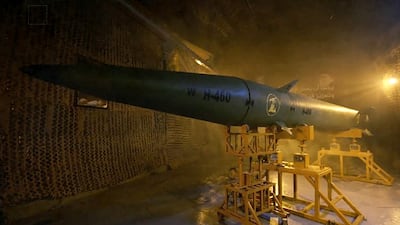
A Qader 1 ballistic missile from Hezbollah's arsenal. AFP -
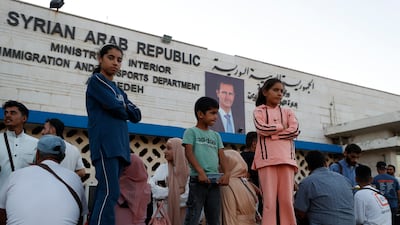
Syrians fleeing the war in Lebanon arrive at the Syrian-Lebanese border crossing in Jdeidet Yabous. AP -
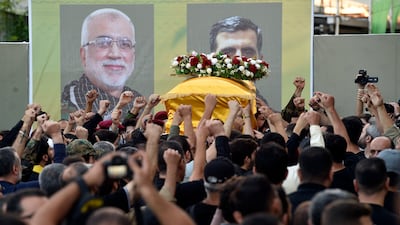
Hezbollah fighters carry the coffin of Hezbollah commander Ibrahim Qubaisi during his funeral in Beirut. EPA -
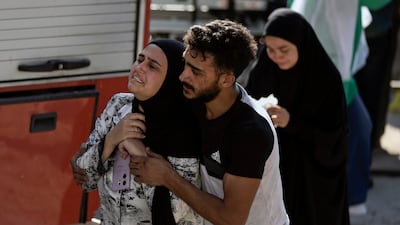
People react at the scene of an Israeli air strike in the town of Maisara, north of Beirut. AP -
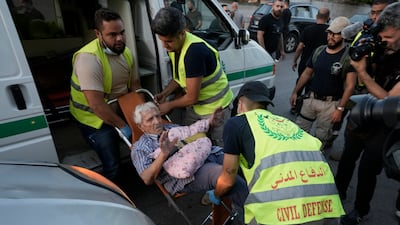
Civil defence workers carry an elderly man who fled from the south of Lebanon, as he arrives at a school turned into a displaced shelter in Beirut. AP -
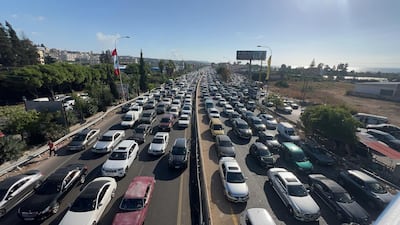
A traffic jam in Ghazieh as people fleeing from the south of Lebanon drive towards Sidon and Beirut. EPA -
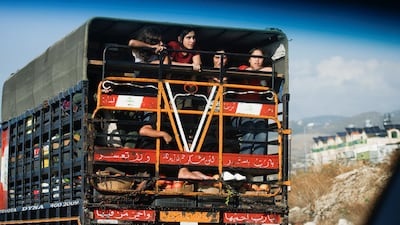
People in heavy traffic drive north from Lebanon's southern coastal city of Sidon, as they flee Israeli bombardment. Reuters -
Smoke billows over southern Lebanon following Israeli strikes, as seen from Tyre. Reuters -
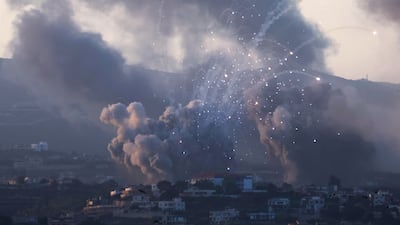
Smoke billows over southern Lebanon following Israeli strikes, as seen from Tyre. Reuters -
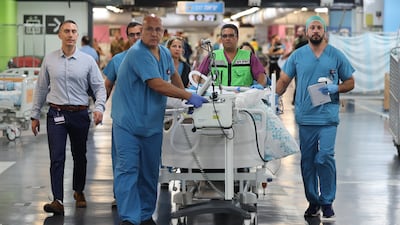
Medics move patients at Rambam Hospital's underground emergency centre, in Haifa, northern Israel. EPA -
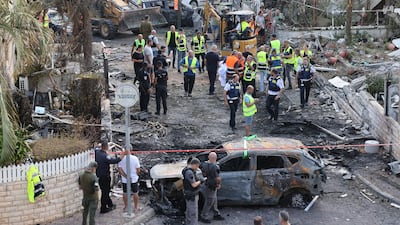
Israeli emergency teams work at the scene of a missile strike on a residential neighbourhood in Kiryat Bialik, northern Israel. EPA -
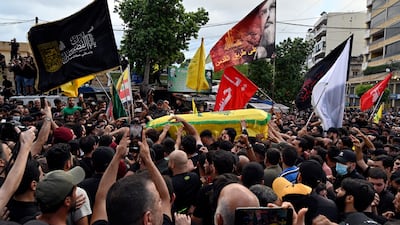
Hezbollah fighters carry the coffin of the group's senior commander Ibrahim Aqil, who was killed in an Israeli strike on September 20, in Beirut. EPA -
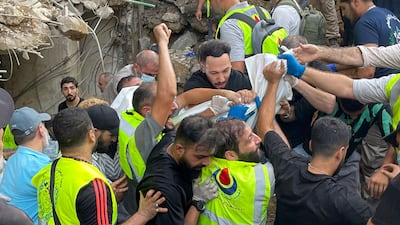
Rescuers carry a body at the scene of a missile strike in the southern suburbs of Beirut. AP


There is an argument to be made that, instead of waging war against Hezbollah, Israel could have declared a ceasefire in Gaza as the one-year anniversary of the conflict approaches. This would have done far more damage to Hezbollah by depriving it of the rhetorical oxygen it has often used to justify its rocket attacks, which the group said it would have ceased once the fighting in Gaza ended.
As a tactic, Israeli assassinations do not address the underlying problems of conflict in the region. Strategically they backfire, as assassinations might lead to unpredictable outcomes, like in 1992.
In the long term, Israel’s tactical military strikes are no panacea for political violence compared to multilateral peace and development strategies. Both the US and France, permanent members of the UN Security Council, had pushed for implementing the 2006 Security Council Resolution 1701, which calls for the Lebanese army and UN peacekeepers to monitor the area south of Lebanon on the border with Israel, creating a buffer zone.
A cessation of hostilities in Gaza and Lebanon would have been the best long-term solution, achieving a more sustainable security than continued conflict that only creates a new generation of Lebanese and Palestinians seeking atonement from Israel. As the one-year anniversary of the war in Gaza is upon us, it appears that Mr Netanyahu is seeking another year of conflict to maintain his hold on power.

